- Home |
- Internal Medicine |
- Bioimpedance Analysis
Bioimpedance analysis
(precise analysis
of body composition)
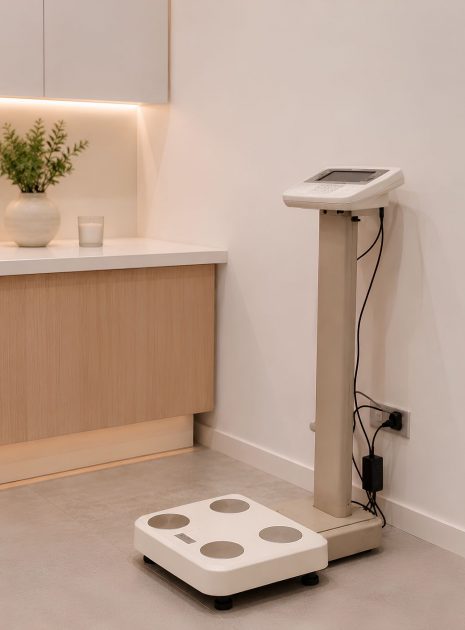
Bioimpedance analysis
(precise analysis
of body composition)
Bioimpedance analysis is a modern, non-invasive method of body composition analysis that allows you to determine not only your weight but also the ratio of body fat, muscle mass, and water, as well as visceral fat levels and other important health indicators.
The test takes only a few minutes, is painless, and helps doctors assess a person’s physical condition much more accurately than a standard weigh-in.
ABOUT THE BIOIMPEDANCE METHOD

Comprehensive health assessment or monitoring of results over time
Bioimpedance analysis can be performed either as a standalone test or as part of a comprehensive health assessment.
As a standalone service, it is recommended for people who want to objectively assess changes in their body composition rather than relying solely on the number on the scale. The test helps monitor progress during:
✔ weight loss or weight gain programs;
✔ dietary and lifestyle adjustments;
✔ sports training and efforts to increase muscle mass;
✔ obesity treatment;
✔ treatment of endocrine disorders (as recommended by a doctor);
✔ hormone therapy, when it is important to assess changes in body composition over time;
✔ monitoring age-related changes in the body.
Bioimpedance analysis is also included in the Check-up programs at Grace Clinic.
Why is bioimpedance analysis performed?
Bioimpedance analysis helps doctors:
✔ assess the ratio of fat to muscle tissue;
✔ determine the amount of visceral fat;
✔ assess the body’s water balance;
✔ calculate basal metabolic rate;
✔ identify hidden metabolic risks;
✔ monitor changes in body composition over time;
✔ develop personalized recommendations for diet and physical activity.

WHAT THE BIOIMPEDANCE METHOD MEANS
For example:
Two people may weigh the same—70 kg.
But one person will have sufficient muscle mass, normal levels of visceral fat, and a healthy metabolism.
The other will have a high percentage of body fat, a lack of muscle, and an increased risk of metabolic disorders.
Regular scales won’t show this.
That’s why bioimpedance analysis assesses not just weight, but actual body composition.

Who Should Undergo Bioimpedance Analysis?
✔ people who want to objectively assess their body composition;
✔ people who are overweight or underweight;
✔ athletes and physically active people;
✔ women after pregnancy;
✔ people over 40;
✔ patients with metabolic disorders;
✔ patients with cardiovascular risk factors;
✔ people undergoing a preventive check-up.
What the Assessment Shows
After the assessment, the physician receives a comprehensive body composition analysis that provides far more information than body weight alone. It evaluates the proportion of body fat, muscle mass, bone mass, hydration status, metabolic characteristics, and other important indicators that help assess your overall health.
✔ Body Weight – the total body weight, evaluated together with other body composition parameters rather than as an isolated value.
✔ Body Fat Mass and Body Fat Percentage – shows the amount of body fat and whether it falls within the recommended range for your age and sex.
✔ Muscle Mass – reflects the amount of skeletal muscle and helps evaluate the effectiveness of nutrition and physical activity.
✔ Visceral Fat – fat stored around the internal organs. Excess visceral fat is associated with an increased risk of cardiovascular disease, diabetes, and other metabolic disorders.
✔ Total Body Water – helps assess hydration status and overall fluid balance.
✔ Intracellular and Extracellular Water – the ratio between these values allows the physician to evaluate cellular health, fluid retention, and hidden edema.
✔ Bone Mass – estimates the mineral content of bone tissue and is used as part of a comprehensive body composition assessment.
✔ Basal Metabolic Rate (BMR) – indicates how many calories your body burns at rest to maintain essential physiological functions. This value helps determine your daily caloric requirements.
✔ Body Mass Index (BMI) – one of the basic indicators of body weight, interpreted together with body fat and muscle mass measurements.
✔ Metabolic Age – an estimated indicator showing how your metabolism compares with the average values for a specific age group.
WHY IS THIS IMPORTANT?
No single measurement provides a complete picture of your health. Only a comprehensive analysis of all parameters allows the physician to assess your body's condition, identify hidden health risks, and provide personalized recommendations regarding nutrition, physical activity, and lifestyle.
Bioelectrical impedance analysis is particularly valuable when performed repeatedly. Comparing results over time allows your physician to monitor changes in body fat and muscle mass, evaluate the effectiveness of nutrition, exercise, or treatment programs, and adjust recommendations when necessary. For this reason, follow-up assessments may be recommended at regular intervals.
How the Assessment Is Performed
-
The physician enters your basic anthropometric data.
-
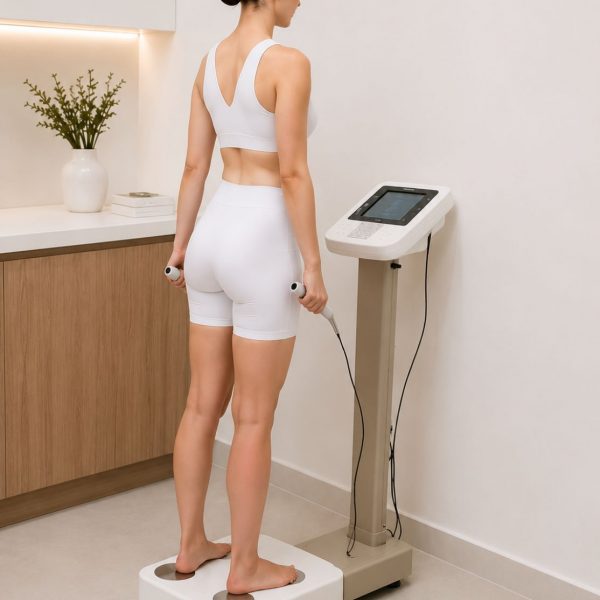
The patient stands on the analyzer and holds the hand electrodes.
-
A safe, low-level electrical current passes through the body.
-
Within 1–2 minutes, a detailed report is generated.
-
The physician explains the results and provides personalized recommendations.
How to Prepare for the Assessment
Before the procedure, please:
-
avoid eating for 2–3 hours;
-
avoid physical exercise;
-
avoid alcohol consumption;
-
empty your bladder;
-
if monitoring progress over time, undergo the assessment at approximately the same time of day.
Contraindications
Bioelectrical impedance analysis should not be performed in patients who:
✔ have a cardiac pacemaker;
✔ have an implantable cardioverter-defibrillator (ICD);
✔ are pregnant.
Why Choose Grace Clinic for Your Assessment?
✔ Your results are interpreted by an experienced physician—not simply presented as numerical data.
✔ We evaluate your overall health rather than focusing on individual measurements.
✔ The assessment can be performed as a standalone service or as part of our comprehensive Check-up programs.
✔ Ongoing monitoring allows physicians to evaluate the effectiveness of treatment, nutrition, and exercise over time.
✔ A comprehensive approach combines body composition analysis with laboratory testing and physician consultation for a complete understanding of your health.
Important: Bioelectrical impedance analysis does not establish a medical diagnosis. It is a modern body composition assessment tool that provides physicians with valuable clinical information, supporting more accurate evaluation and well-informed medical decision-making.
Who performs the diagnosis and treatment?
All doctors Tetyana

Terletska
Internist, family physician, and rheumatologist. He combines evidence-based medicine with the principles of preventive and integrative medicine, focusing not only on treating symptoms but also on identifying the causes of health issues and developing personalized strategies to support the body.
Bioimpedance Analysis
Sign UpBioimpedance Method
Schedule a ConsultationBioimpedance analysis may also be included in a check-up
Bioimpedance analysis can be incorporated into Grace Clinic’s personalized comprehensive check-up programs, helping the doctor assess the body’s condition much more thoroughly than based solely on laboratory test results.
The combination of tests, a doctor’s consultation, and a body composition assessment allows us to develop personalized recommendations regarding nutrition, physical activity, and disease prevention.